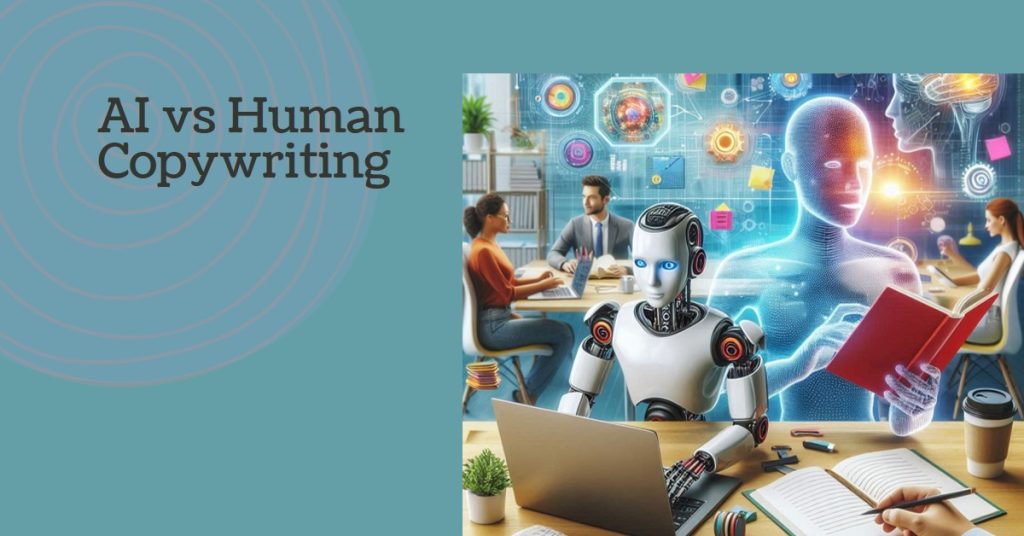
The debate is everywhere right now. Business owners, marketers, and writers are all asking the same question. Is AI better than human copywriters? Or do humans still have the edge? AI vs human copywriting is one of the hottest contested topics in marketing today. And for good reason. The stakes are high. Your words drive sales, build trust, and shape your brand. Getting this decision wrong can cost you customers and credibility. This guide breaks it all down. No hype. No bias. Just a clear, honest comparison to help you make the smartest choice for your business.
What Is AI Copywriting?
AI copywriting uses artificial intelligence tools to generate written content. These tools are trained on vast amounts of text data. They learn patterns in language, tone, and structure. Then they use that knowledge to produce written content on demand.
Popular AI writing tools in 2026 include Claude, ChatGPT, Jasper, Copy.ai, and Writesonic. These platforms can generate blog posts, product descriptions, email sequences, social media captions, and ad copy — often within seconds.
AI copywriting has evolved dramatically. Early versions produced robotic, generic content. Today’s tools are far more sophisticated. They can match tones, adapt to brand voices, and produce surprisingly natural-sounding text. However, they may inherit biases from the training data, raising privacy concerns. We’ll explore these limitations shortly.
The rise of AI copywriting has disrupted the entire content industry. Freelance writers, agencies, and in-house marketing teams have all had to rethink how they work. Some see AI as a threat. Others see it as the most powerful productivity tool available. The truth, as usual, lies somewhere in between.
What Is Human Copywriting?
Human copywriting is the craft of writing persuasive content created entirely by a person. Professional copywriters study consumer psychology, storytelling, and persuasion. They craft words designed to move people — emotionally and commercially.
Great human copywriting does more than inform. It connects. It makes the reader feel seen, understood, and compelled to act, fostering empathy that AI cannot replicate.
Human copywriters bring creativity rooted in real-world understanding. They understand humour, irony, and tone in ways that go beyond pattern recognition, inspiring trust in their originality.
Human copywriting is also collaborative. A skilled copywriter asks questions, making you feel heard and understood, adding value beyond the words alone.
AI vs Human Copywriting: The Key Differences
Let’s get specific. Here’s how AI and human copywriting compare across the factors that matter most, and which types of content each approach is best suited for.
Speed
AI wins here — and it’s not even close.
AI tools can produce a 1,000-word blog post in under 60 seconds. A human copywriter might take several hours to research, draft, and refine the same piece. For businesses that need high volumes of content quickly, AI offers a speed advantage that humans can’t match.
It makes AI ideal for scaling content production. Product descriptions for an e-commerce store with 500 items. Email sequences for complex automation workflows. Social media calendars are planned weeks in advance. These tasks become far more manageable with AI assistance.
Cost: AI vs Human Copywriting
AI is significantly cheaper at scale.
A subscription to a premium AI writing tool costs anywhere from £20 to £100 per month. A skilled human copywriter charges £50 to £300 per hour — or more for specialist work. For startups and small businesses with tight budgets, the cost difference is significant.
However, cost must be weighed against outcome. If AI-generated copy converts poorly and human-written copy drives strong sales, the more expensive option becomes the better investment. Cost-per-result matters more than cost-per-word.
Creativity and Originality
Humans win decisively.
AI generates content by predicting patterns from its training data. It doesn’t truly imagine. It doesn’t have original ideas. And it recombines existing concepts in ways that can appear creative — but aren’t in the genuine sense.
Human copywriters can make unexpected conceptual leaps. They can craft a campaign that feels completely fresh. They can find an angle no one has considered before. This kind of originality is what makes truly great copywriting stand apart from competent copywriting. AI can produce competent. Humans can produce the extraordinary.
Consistency
AI wins here.
Human copywriters have off days. Their tone can shift over the course of a long project. Maintaining absolute brand voice consistency across hundreds of pieces is genuinely difficult for any person.
AI produces consistent output every time. Once you programme the right tone, style, and brand guidelines into your prompt, AI reliably reproduces that standard. For brands that need strict consistency — particularly across large content libraries — this is a real advantage.
Emotional Intelligence
Humans win — by a wide margin.
Copywriting is fundamentally an emotional craft. The best copy makes people feel something. Fear of missing out. Excitement. Relief. Trust. These emotions drive purchasing decisions.
AI can mimic emotional language. But it doesn’t feel anything. It can’t truly understand grief, joy, anxiety, or aspiration. It can approximate the language of emotion — but skilled human copywriters write from genuine understanding. That difference is subtle but powerful. And readers often sense it, even if they can’t articulate why.
SEO Capability: AI vs Human Copywriting
It’s a draw — with caveats.
AI tools can quickly produce SEO-optimised content. They can incorporate keywords, structure headings correctly, and match search intent effectively. It makes them genuinely useful for content-at-scale SEO strategies.
But the best SEO content still requires human judgment. Understanding search intent deeply. Crafting a meta description that compels clicks. Writing a headline that balances keyword inclusion with genuine appeal. These tasks benefit enormously from human expertise.
In 2026, Google’s algorithms are better than ever at detecting low-quality AI content. Helpful, original, deeply researched content consistently outranks generic AI output. Human oversight of AI-generated SEO content is not optional — it’s essential.
Accuracy and Reliability
Humans win — with a significant caveat.
AI tools hallucinate. It is a well-documented problem. AI can confidently state incorrect facts, fabricate statistics, and invent sources. For factual content — health, finance, legal, or technical writing — this is a serious risk.
Human copywriters make errors, too. But their mistakes are generally honest and detectable. AI errors can sound plausible and be difficult to spot without careful fact-checking. Any AI-generated content must be thoroughly reviewed before publication.
Where AI Copywriting Excels
Let’s be specific about where AI genuinely shines. Using AI in the right contexts is smart. Fighting it everywhere is not.
High-volume, formulaic content. Product descriptions, meta descriptions, category page copy, and FAQ sections — these formats are structured and repetitive. AI handles them efficiently and adequately.
First drafts. Starting a blank page is one of the hardest parts of writing. AI can produce a usable first draft in seconds. A skilled human then edits, sharpens, and elevates it. This workflow is faster than starting from scratch.
Brainstorming. AI is excellent at generating ideas. Need 20 headline options? 10 email subject line variations? A list of potential angles for a blog post? AI delivers all of these quickly. Humans then select and refine the best ideas.
Repurposing content. Turning a blog post into social media captions, summarising a long report into an email, and adapting a script for different platforms. AI handles content repurposing tasks with impressive efficiency.
Personalisation at scale. AI can tailor content variations for different audience segments far faster than a human team could. It is particularly valuable in email marketing and paid advertising.
Where Human Copywriting Is Irreplaceable
Now let’s be equally honest about where human copywriters remain essential.
Brand-defining copy. Your tagline. Your brand story. And your homepage headline. These words define who you are. They need to reflect genuine insight into your audience and an authentic expression of your brand. AI can produce adequate versions. Humans produce memorable ones.
High-stakes sales copy. Sales pages, VSLs (video sales letters), and long-form direct-response copy require a deep understanding of buyer psychology. A conversion rate difference of 1–2% on a sales page can represent tens of thousands of pounds in revenue. It is where experienced human copywriters earn their fees many times over.
Sensitive or complex topics. Mental health content. Medical information. Financial advice. Grief, trauma, or recovery stories. These topics require human empathy, ethical judgment, and real-world understanding. AI should not be trusted here without substantial human oversight.
Thought leadership and opinion. Articles that share genuine expertise, controversial positions, or original insights require a human perspective. AI doesn’t have opinions. It doesn’t have true expertise. Thought leadership content that lacks a genuine human viewpoint falls flat quickly.
Cultural and contextual relevance. A campaign targeting a specific cultural moment, a topical news hook, or a regional audience requires awareness that AI doesn’t possess. Humans understand cultural subtext. AI often misses it entirely.
The Rise of the AI-Human Hybrid Approach
The smartest businesses in 2026 are not choosing between AI and human copywriting. They’re combining both. This hybrid model is rapidly becoming the industry standard — and for good reason.
Here’s how the hybrid workflow typically looks:
Step 1 — Strategy (Human). A human copywriter or strategist defines the goal, audience, angle, and tone. This creative brief guides everything that follows.
Step 2 — First Draft (AI). AI generates a first draft based on the brief. It saves significant time and gives the human something concrete to work with.
Step 3 — Editing and Elevation (Human). A skilled human editor rewrites, sharpens, and injects genuine insight, emotion, and originality. They fact-check everything. They ensure the copy truly connects.
Step 4 — Optimisation (AI-assisted). AI tools help with SEO checks, readability scores, and A/B testing variations. The human makes final decisions.
Step 5 — Review and Publication (Human). A final human review catches anything AI may have missed. Then the content goes live.
This approach captures the best of both worlds. The speed and scale of AI. The intelligence, creativity, and emotional depth of human expertise. Businesses using this model are producing more content, faster — without sacrificing quality.
What Does AI Copywriting Mean for Human Writers?
It is the question many copywriters are asking. And it deserves an honest answer.
AI has undeniably disrupted the lower end of the copywriting market. Generic, formulaic writing tasks that once went to junior copywriters are now frequently handled by AI. It is real. Pretending otherwise helps no one.
But skilled, experienced copywriters are not going away. They’re evolving. The demand for strategic thinking, brand positioning, conversion optimisation, and high-quality editorial judgment has not diminished. If anything, it’s grown — because someone needs to direct, edit, and elevate the enormous volume of AI-generated content being produced.
The copywriters who will thrive are those who embrace AI as a tool. They use it to increase their output and speed. They focus their human energy on the strategic, creative, and emotional work that AI genuinely cannot do. And they position themselves as creative directors and strategists — not just word producers.
If you’re a writer, the message is clear. Learn to use AI tools proficiently. Develop the skills that AI cannot replicate. And focus on delivering value that goes far beyond what any algorithm can produce.
AI vs Human Copywriting: Which Should You Choose?
Here’s the honest answer. It depends on what you need.
Choose AI copywriting if:
- You need high volumes of content produced quickly
- Your budget is limited, and your content is formulaic
- You’re creating first drafts, brainstorming ideas, or repurposing existing content
- You have a skilled human editor to review and refine AI output
And choose human copywriting if:
- You need brand-defining, high-stakes, or emotionally resonant copy
- Your topic is sensitive, technical, or requires genuine expertise
- You’re writing long-form sales copy where conversions directly impact revenue
- You need original thought leadership or culturally relevant content
Choose the hybrid approach if:
- You want the best of both — speed, scale, and quality
- You’re running a growing business with ongoing content needs
- You have access to both AI tools and skilled human writers or editors
For most businesses in 2026, the hybrid model is the clear winner. It’s faster than purely human copywriting. It’s better than purely AI copywriting. And it’s more cost-effective than either extreme used on its own.
Frequently Asked Questions: AI vs Human Copywriting
Q: Can Google detect AI-written content? Google’s algorithms have become increasingly sophisticated at identifying low-quality AI content. However, Google’s stated position is that it evaluates content based on quality and helpfulness — not the method used to create it. High-quality, human-reviewed AI content can rank well. Thin, generic AI content tends not to.
Q: Will AI eventually replace all human copywriters? It is unlikely in the foreseeable future. AI lacks genuine creativity, emotional intelligence, strategic thinking, and cultural awareness. These are precisely the qualities that drive the most valuable copywriting work. AI will replace routine writing tasks. It will not replace the skilled humans who direct, refine, and elevate written content.
Q: What’s the best AI copywriting tool for beginners? Claude and ChatGPT are the most accessible starting points. Jasper offers more marketing-specific templates. Copy.ai is beginner-friendly with a straightforward interface. Try free trials before committing. The best tool is the one that fits your workflow and produces output that requires the least correction.
Q: How do I make AI-generated copy sound more human? Edit heavily. Add specific details, personal anecdotes, and brand-specific language. Remove generic phrases. Vary sentence length. Inject genuine emotion and point of view. The more a human edits AI copy, the less it reads like AI copy.
Q: Is AI copywriting ethical? Using AI as a writing tool is widely accepted. Passing off AI-generated content as entirely original human work without disclosure is more ethically complex — particularly in journalism, academia, or contexts where authenticity is a core expectation. Transparency is always the safer and more trustworthy path.
Final Thoughts
The AI vs human copywriting debate doesn’t have a single winner. Both have genuine strengths. Both have real limitations. The businesses and writers who understand this clearly will make smarter decisions — and get better results.
AI is a powerful tool. It’s fast, scalable, and increasingly capable. But it’s a tool. It doesn’t think. It doesn’t feel. And it doesn’t truly understand your audience or your brand. Those things still require a human.
The future of copywriting is not AI replacing humans. It’s humans and AI working together — each doing what they do best. Embrace that reality, and you’ll be ahead of most of your competitors.
Words still matter. How you create them is evolving. But the goal remains the same — to connect with real people and move them to act.
Disclaimer: This article is for informational and educational purposes only. The referenced pricing and tool capabilities are approximate and subject to change. Always evaluate AI tools based on your own needs and conduct independent research before making purchasing decisions.
Affiliate Links:
Some links in this article may be affiliate links, meaning they could generate compensation to us without any additional cost to you, should you choose to purchase a paid plan. These are products we have personally used and confidently endorse. Please note that this website does not provide financial advice or investment recommendations. You can review our affiliate disclosure in our privacy policy for more information.